Avatar: The Last Airbender has always been extremely important to me, from watching the premiere as a little kid on Nickelodeon to holding watch parties in college for The Legend of Korra to reading the comics. In my adulthood, during COVID, I rediscovered Avatar when it came to streaming and saw an entirely new show unfold in front of me: of course, as a child I had taken in the messages about racism, friendship, and love, but the deeper intricacies of the show were beyond my understanding. Now truths about the terrors of genocide, fascism, and totalitarian oppression faced me. But most importantly, it urged, begged, pleaded with us to learn to forgive our enemies.
Avatar: The Last Airbender has become, in a world where fascist rhetoric is now being passed around casually by the people running many of the world’s most powerful countries, very important. The strengths of the show go beyond its characters, beyond its world, beyond its lessons. I truly believe it’s the greatest piece of media ever created, and I don’t believe I’d be alone in saying so. That all being said, Avatar has been done dirty by its owners at Paramount, particularly CEO David Ellison. His friends in the government and corporate world are the exact people that the show is trying to warn us about, and that’s all I’ll say about that.
In 2021, before Ellison took over, Paramount created a wholly-owned subsidiary called Avatar Studios with a team of a few dozen people under the complete creative control of series creators Michael Dante DiMartino and Bryan Koneitzko (known affectionately by fans as Mike and Bryan) to create a new series of films centering on past Avatars, starting with this one, as well as the new series Avatar: Seven Havens that follows The Legend of Korra. The Netflix show, mostly rejected by fans despite a pretty good second season, was done without Avatar Studios’ involvement.
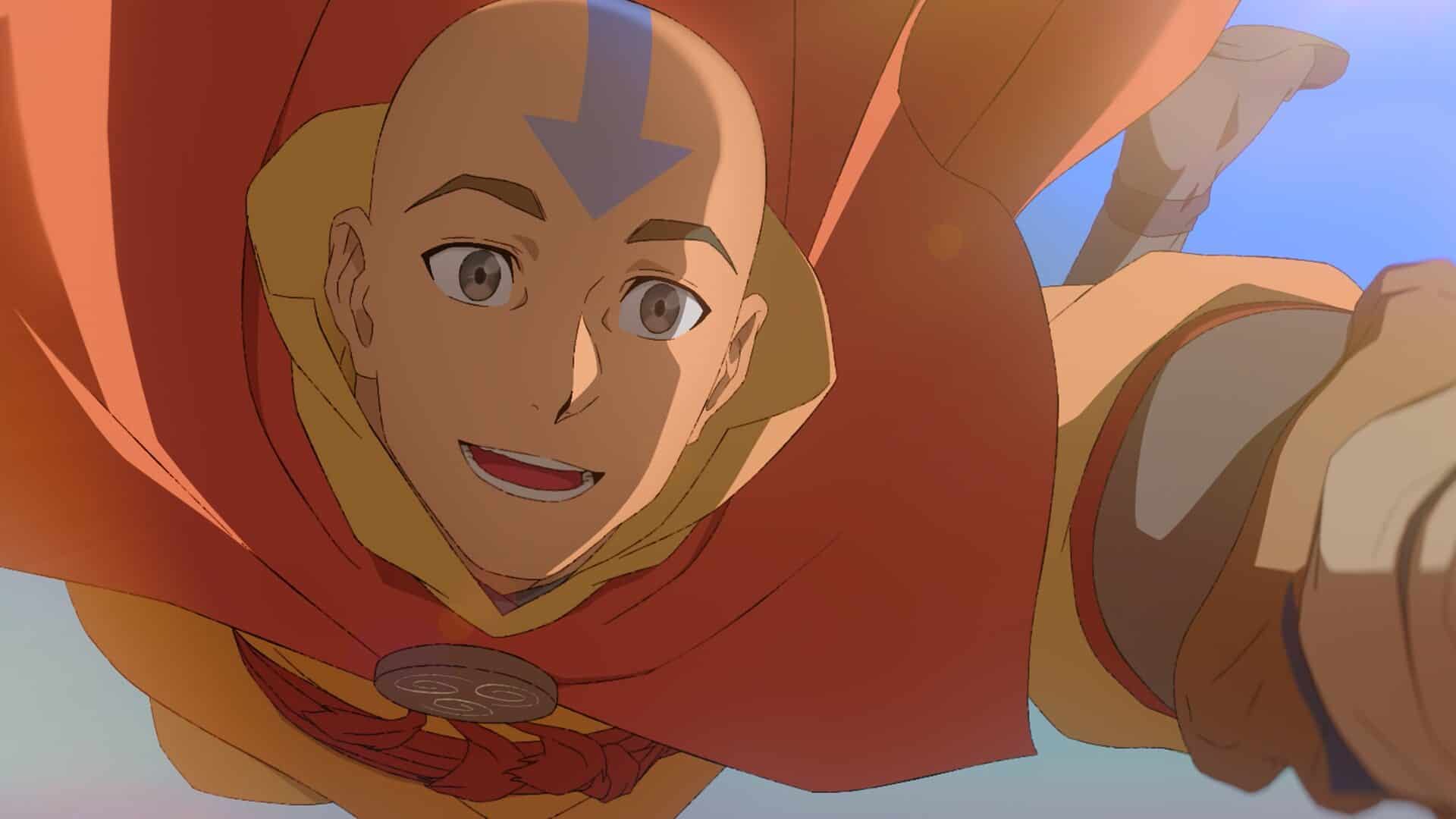
Now that the franchise is finally back, us fans should be excited – instead, we are anxious, worried that Paramount will grab at any reason it can to kill our favorite franchise. After being demoted from theatrical release to streaming, and then infamously leaked, Avatar Aang was pushed onto Paramount Plus with near-zero marketing. It does feel, at least from the outside, that Paramount is purposefully tanking the franchise. With this film being the first canon Avatar content in 12 years since Korra ended, it really, really needed to show up. Thankfully, it did.
Avatar Aang is set 12 years after the end of the original show, with our heroes now in their late 20s. If you are a superfan and read the canon comic books as I did, you won’t be surprised to see Republic City in its infancy, where Aang has transformed the Fire Nation Colonies into a new city for all the nations to live in harmony. There are also some great ties to The Legend of Korra, with the Denied representing an early wave of anti-bending sentiment among the public that over the next few decades will evolve into The Equalist Movement under Amon.
Each of our main cast is reintroduced in such a way that’d be perfect if you haven’t seen the series in many years, instead of on repeat every 4 months as I do. Famously, every character was recast for this film, with Mike and Bryan making the difficult decision to have the voice actors for each character come from backgrounds similar to these characters. We can debate over whether it makes sense to fully recast these beloved characters, but it truly didn’t bother me being that they are now considerably older. People don’t sound the same when they are teenagers as when they are 28, so it didn’t take much for my brain to smoothly accept the new voices.
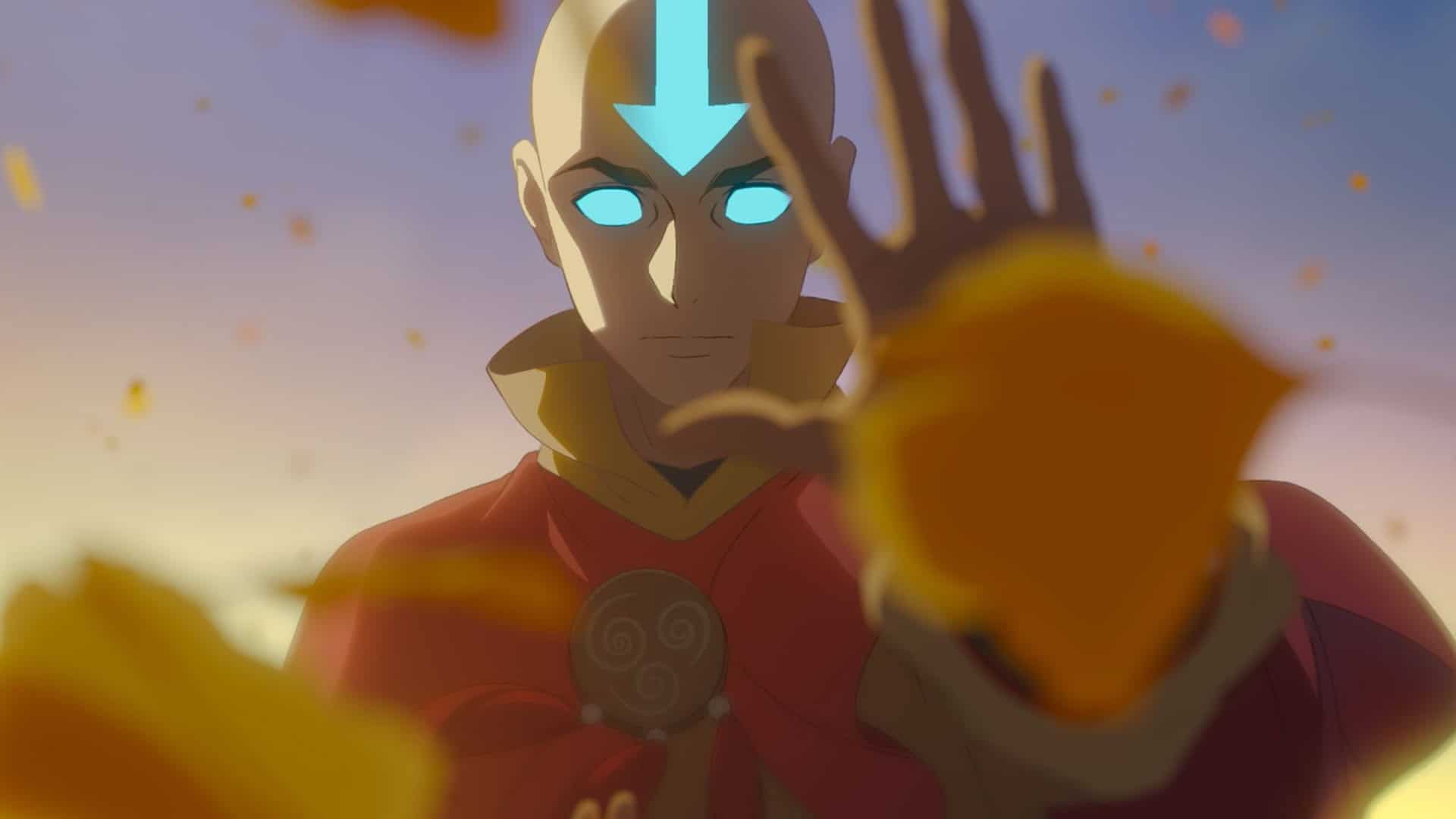
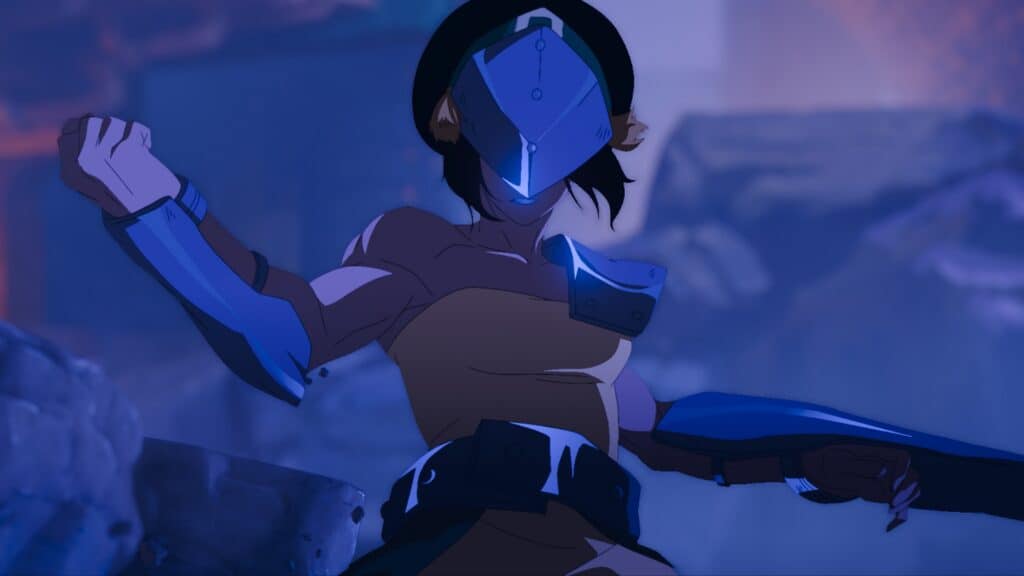
As for performances, I was pretty pleased with all of them. Eric Nam (Aang) easily has the most screen time, along with the villain Tagah played by Dave Bautista. Nam puts in a good performance, capturing Aang’s calm demeanor and his intensity, while Bautista is a little out of his element voice acting. Not to say that he’s not great, but he’s an actor who depends a lot on face and body acting, which doesn’t come across here. The other performances were good, with some, like Toph, sounding like a very natural evolution of what she’d be like as an adult. It is worth noting that the movie is definitely called Avatar Aang for a reason; the rest of the cast does not get a lot of screentime, nor any character arc to speak of, with their presence mostly being aura farming and hype moments. That’s okay – it’s a movie, and trying to stuff in more content in the 99-minute runtime would only dilute Aang’s story.
The story introduces Tagah, sealed in an iceberg as Aang was, who the Avatar frees. He is also an airbender, gifted powers by Avatar Sonum thousands of years ago using a powerful spirit staff. This is not that much of a stretch, considering that in The Legend of Korra the opening of the spirit portals brings airbending back into the world. Why not a staff wielding the same power? Tagah, who is very clearly hiding something, convinces Aang to help him track down the staff and use it to bring airbending back to the world. The story is straightforward and simple, much simpler in fact than the average episode of the children’s show it’s following.
While I did find the story a tad disappointing, with it basically just doubling down on Aang’s perpetual anguish about losing his people instead of progressing the overall story, I think it was the right move. Most people are going to watch this film coming back to the world of Avatar for the first time since 2020, and a huge chunk probably haven’t seen it since Korra ended in 2014. This is Aang’s movie – let it be about Aang’s plight. I did like that this story makes Korra bringing back the Air Nation 50 years later that much more impactful. The writing is also a little less tight than Avatar, and the jokes are a little less funny. I do hope Mike and Bryan haven’t lost their touch, but we’ll see when Seven Havens drops. Regardless, this franchise has always been honest, thorough, and genuine in its stance on pacifism; it’s not a thing to grab onto at the end of the movie to try to wrap things up in a bow quickly. It is always who Aang has been.
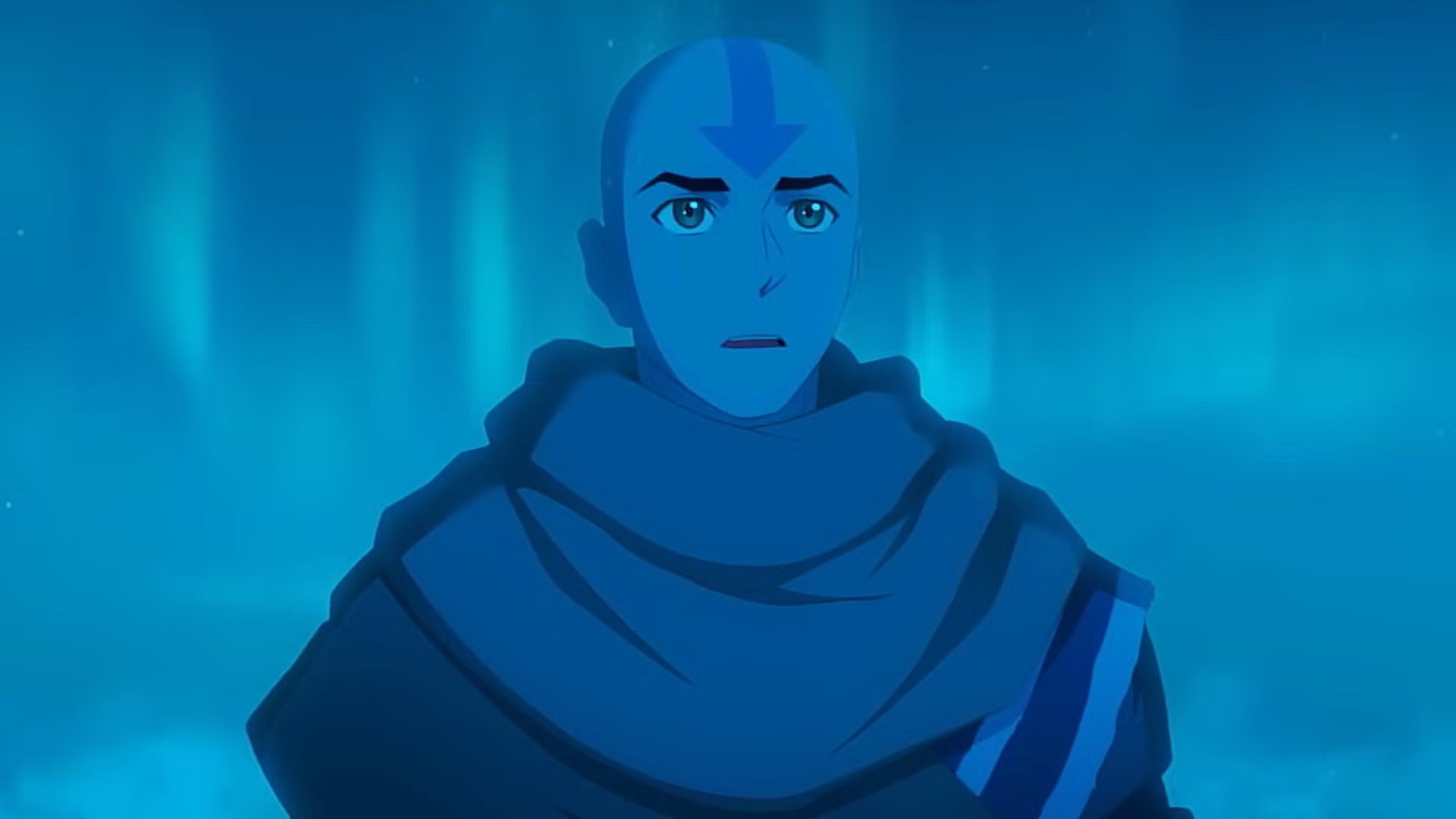
The thing that has most drawn attention is the animation style. This style is totally new for the franchise, and may be totally new to my eyes as well. It does not resemble Avatar: The Last Airbender, Korra, or the upcoming Seven Havens at all. It’s also jaw-droppingly incredible. Without hyping it up too much, the art and animation blew me away as much as the first time I saw a Studio Ghibli movie back in 2001. This movie is not only a feast for the eyes; it is an achievement in animation. The movie is animated in 3D but presented as if it’s 2D, which results in some really memorable scenes and fights dressed in beautiful coloring. Jeremy Zuckerman, composer of the original series, also returns to score this movie to outstanding success – when the rearrangement of the Avatar State theme kicked in, every hair on my body stood up. It would have been great to see in a theater, on the big screen and with high-quality sound systems…
We don’t know what the fate of the Avatar franchise is right now, especially with Paramount’s push to buy Warner Brothers and the possibility of them selling off their children’s franchises like SpongeBob SquarePants. All we can do is ensure that we as fans show up for a film that showed up for us. Visiting Republic City with Aang and the Gaang felt good and warm, but also a little unfamiliar. It’s like when you come back to your hometown after a year of being gone, and you still have those good memories, but things are inarguably different now. You can never truly go back, but I think you absolutely can visit. Even with a less stellar story, it is very important right now to embrace these themes of love and forgiveness in a world that is continually pushing us to hate.
Returning to this world will feel good, and I think you could conservatively say this film is an hour and a half of animators and artists just flexing. No, it isn’t as smartly written as its TV show. It doesn’t have a hundred secret cogs turning behind the scenes to set up for future episodes in ways other shows could only dream of. It isn’t intricate or complex, but it is still Avatar. And, I cannot stress this enough, it is gorgeous on a whole other level from most theatrical animation. Avatar Aang: The Last Airbender has done its job, and brought us all home for 99 minutes in a time where there are too many things to consume and too few things to love. So settle in, embrace this trip back home, and smile. You deserve it.
FilmObserver Score: 8/10 – Excellent
 ObserverCrew Picks
 bserver
 bserver